Roadside Recognition Using HLS Hackathon
Energy can be critical in edge devices. Systems that are battery powered or rely on harvested energy need to be as efficient as possible. Which can make deploying inferencing on these systems challenging. Inferencing is notoriously power hungry.
In this hackathon you’ll build an efficient inferencing accelerator.

-
Winners and time limit
-
Winners and time limit
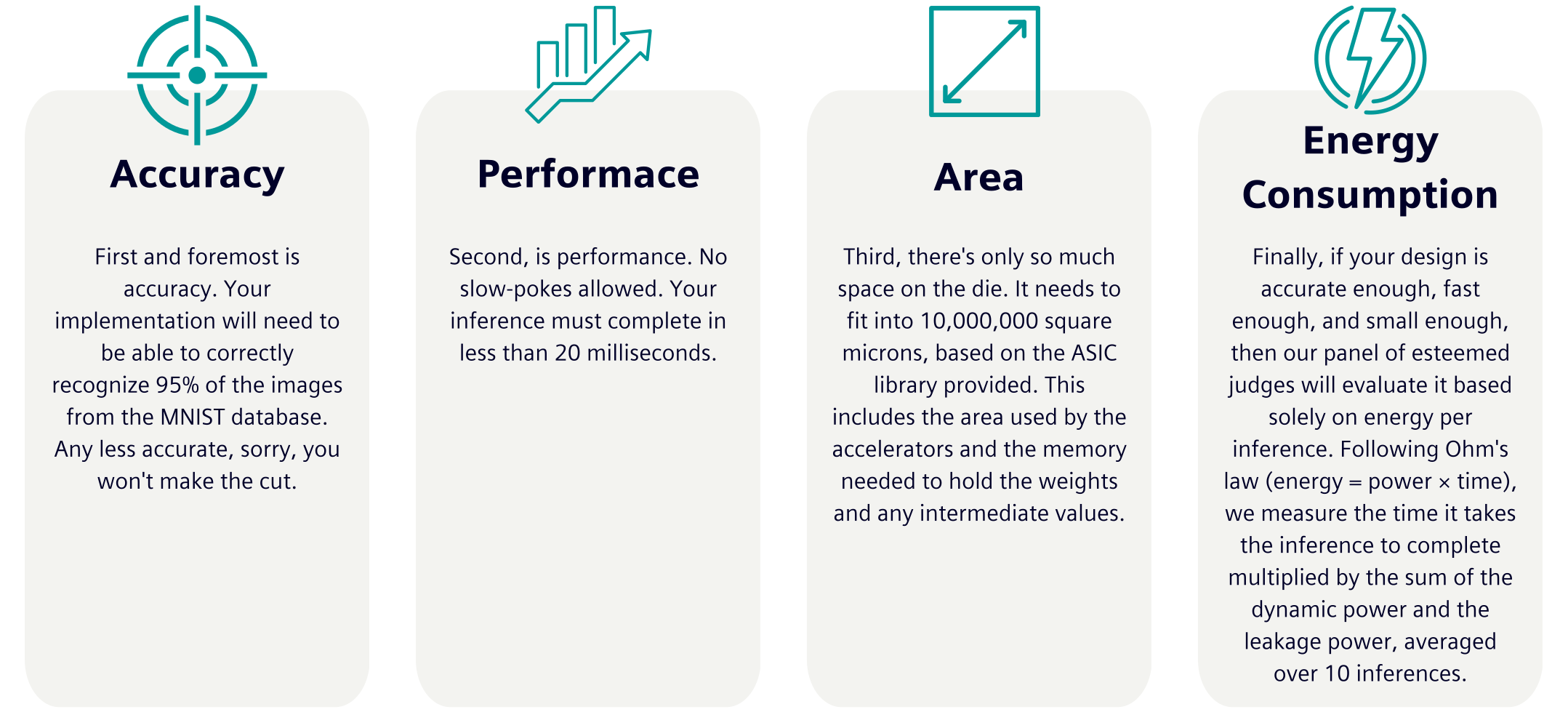
The winner will be the team that can build the most efficient inferencing system, that is the one that delivers predictions with the smallest amount of energy per inference. Your implementation will need to meet strict performance, accuracy, and area requirements, too.
Oh, and there’s a time limit. You’ll have 30 days to complete your masterpiece of efficient engineering. You might want to put in for vacation time now and stock up on your favorite caffeinated beverage.
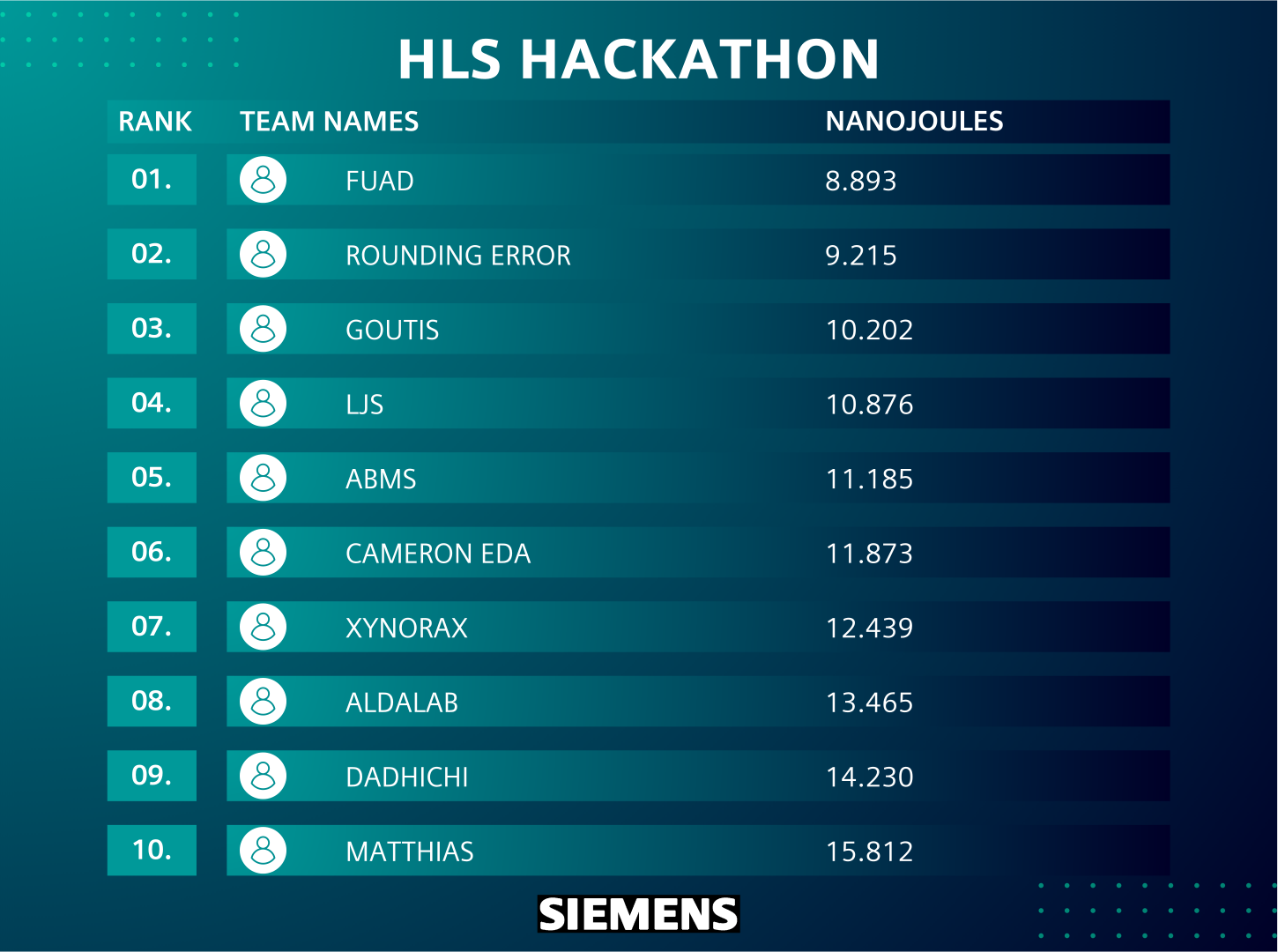
Keep an eye on the leaderboard to see where you stand.Not in the top 10 yet? No problem. Check out the runners-up leaderboard below, you still have time to optimize your design, increase efficiency, and climb to a spot in the top 10 leaderboard!
-
-
Top 10 Leaderboard
-
Leaderboard
-
-
Leaderboard Insights
2026 Summer Hackathon Podcast
Catch Russell Klein and Matthew Bone on our hackathon podcast that covers submissions, tips, and exclusive updates through the course of the High-Level Synthesis 2026 summer hackathon.
-
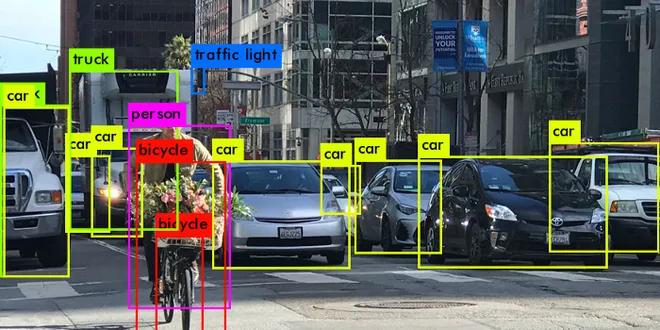
The Algorithm – roadside recognition
We’re going to be using an object recognition algorithm. It will recognize ten kinds of objects found on the side of the road. It will process an input of a 20x20 pixel image and try to match it to one of ten categories.
While it processes a tiny image, we picked this because it's small enough to retrain in a few minutes, it's practical to run in logic simulation, and it can be characterized quickly. Bottom line, you’re going to be able to get through more design iterations faster. Which you’re going to need to zero in on the optimal architecture.
-
The Starting Line
You’ll be given a virtual machine equipped with all the tools and IP you’ll need to build and characterize an ASIC implementation of your inferencing accelerator, courtesy of Siemens EDA. You’ll start with RocketCore RISC-V design, and a bare metal application that runs the recognition algorithm. Your job is to make the inference run faster than any software implementation could possibly go, all while your design sips tiny amounts of energy to get the job done.
-
Objectives Title
Objectives
-
Objectives image
-
Objectives Conclusion
Will your strategy be to go as fast as possible? Or did you want your power to be as low as possible, but mosey through the calculations? Or perhaps the middle of the road, kinda fast and kinda low power?
-
Do you have what it takes
-
Do you have what it takes?
Winning this hackathon will require a true renaissance engineer. The skills needed range from Python, machine learning, and system design to low level power optimization in RTL. C and C++ programming prowess is essential, as are hardware design techniques and a basic understanding of SystemVerilog.
-
-
Winning Criteria
-
Winning Criteria Recap
The winning design will be the one that meets the accuracy, performance, and area criteria, and consumes the least average energy per inference. You'll be using PowerPro™ software from Siemens EDA to measure the power of your combined hardware and software system.
May the best design win!
-
-
Getting Started
-
Step By Step Guide
- Create or login to your hls.academy full-access account.
- Use your work or school email address – ensure it's a professional email or the gatekeepers won't let you in!
- Set up your Siemens Xcelerator account here.
- Use your company email address (personal domains like Gmail won't work here)
- Add the FREE 2,500$ Catapult training - click here for an easy link to the checkout cart.
- Don't forget to add the hackathon discount code, 'ExploreVEP__30' (note the double underscores!)
- Login once you get the all clear email. Explore the Siemens Training Dashboard and look for the High-Level Synthesis 2026 Hackathon learning path.
- Launch the Hackathon, start with "Module 1: Hackathon Introduction," open the detailed instructions in a new window, then click the green "Start Here" button to create your VM.
- Enter the Virtual Lab and click "HTML5 version" button (NOT "Launch DCV"), it'll open a terminal window in the new browser window and then you follow the hackathon lab instructions.
- Once you're done, don't forget to come back here and submit your entry using the form below – lowest energy per inference wins!
- For help and inquires visit the HLSA Forums.
- Create or login to your hls.academy full-access account.
-
Getting Started Doc
Here's a more detailed step-by-step guide.
-
-
Prizes, Trophies, and Bragging Rights
Of course, the winners will have bragging rights. Post it up on LinkedIn that you won the High-Level Synthesis low-energy inferencing hackathon! Your achievements will reach legendary status.
But wait, there’s more. Winners of a hardware design contest deserve hardware. As one of the top 3 winners, you will get a tasteful trophy commemorating your victory. Suitable for a place of distinction in your office or cubicle, where your co-workers and managers can marvel at your awesomeness.There’s even more...
Actual Prizes
🥇The first-place winner will receive a Elegoo’s Neptune 3D printer, and an opportunity to speak at the Edge AI foundation’s Fall Taipei event (physically or virtually) to tell the world in your own words how you reached such amazing heights of success. Literally, and we literally mean this “literally,” fame and fortune.
🥈The second-place winner will receive a Pynq FPGA development board from Digilent, to hone their skills for next year’s competition. The Pynq board combines an ARM processor with Python and AI capabilities with FPGA fabric from AMD.
🥉The third-place winner will receive a pair of Bose QuietComfort Earbuds. So, they can lose themselves in a blissful bubble of iconic audio, completely undisturbed by mere mortals thanks to that renowned noise cancellation. With a relentless, long-lasting battery powering their escape, all neatly packed into a compact, durable design, who can blame them, they earned it. Participate to avoid the sudden pang of 'earbud envy'!
-
Hackathon Rules
For questions and help, please visit the HLSA Forums.
-
Hackathon Rules
-
Submission Form